أرشيف التصنيف: إلى الإنكليزية
Eye Witness Accounts and Stories from within the Syrian Regime’s Prisons
Omar al Asaad
Dr Mohammad flips his new ID card, looks at this neighbour in the bed next to his bed and breaks out into a fit of laughter. The ID card which the detained doctor now holds in Adra prison includes a sentence that points out his crime: “weakening the national feelings!” He shares the same crime with Feras who is lying on the top bunk bed. The doctor ascertains that “this lad [Feras] is a simple naive guy, he isn’t crazy or mentally disabled but he does not fully comprehend what is happening around him. He even demonstrates speech problems and his facial features from a medical standpoint look abnormal.

Syria: Autopsy of a Regime
Nadia Aissaoui and Ziad Majed
21 March 2012
More than a year has passed since the start of the Syrian revolution demanding freedom, dignity and the departure of the Assad family. Over ten thousand dead, a hundred thousand injured and more than 40 thousand refugees fled to Turkey, Lebanon, and Jordon as well as about a hundred and fifty thousand citizens who were arrested, twenty thousand of them are still in detention. All this in addition to damages to property and infrastructure and the systematic destruction of many regions.
The original article in French can be read here. An Arabic text is also available here.
Tens of reports have been published by various human rights organisations including Human Rights Watch, Amnesty International, the United Nations Council for Human Rights, and Médecins Sans Frontières documenting verified cases and eye witness accounts. All these, as well as films and interviews conducted with doctors, activists, and defected soldiers ascertain that atrocities and violations are being carried out in Syria which can be classified as crimes against humanity.
Freedom for the Sheikh, the Preacher, Ahmad Mouaz Al-Khatib Al-Hasani
Ahmad Mouaz Al-Khatib Al-Hasani, Born in Damascus, 1960. Preacher and ex-Imam of the Grand Omayyad Mosque in Damascus. He was detained on Friday the 27th of April 2011 He was previously detained three times despite the lifting of the state of emergency.
Freedom for the Sheikh, the preacher, Ahmad Mouaz Al-Khatib Al-Hasani.
Source:
Syriatel.. an Establishment? Or an Intelligence Branch
SYRIATEL .. an Establishment? Or an Intelligence Branch?
Omar Al Assil
5 April 2012
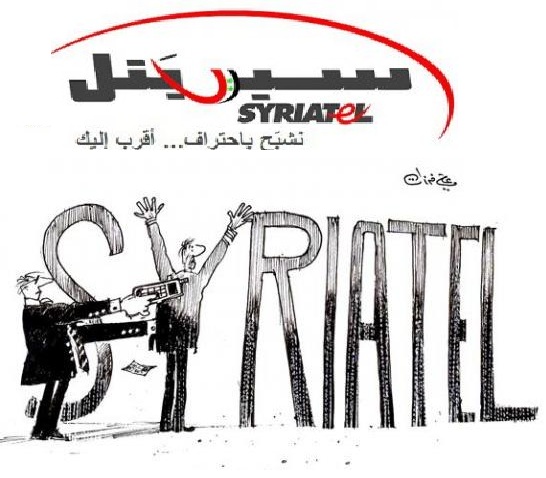 I wrote, about a year ago (27 April 2011), in a blog: (SYRIATEL .. with or against us?) about Syriatel Mobile Operator and their exclusion policies, by tracking its employees’ news and writings on the Facebook, terminating those who seem to be even only empathizing with the demonstrators. I wrote about special cases where I was an eye-witness.
The events have not stopped since I published that article. Investigations were directed to find out the writer, and punish him. They did manage to get to the company I worked with, and, using their relation with its management, passed their complain, suggesting the termination of my contract with it. For their misfortune, the company was a foreign company, and it ignored their request. استمر في القراءة
Flood in Baath Land, Documentary by late Syrian director Omar Amirallay
ولد عمر أميرالاي (1944- 2011) في دمشق من أسرة لها أصول شركسية وتركية وكردية وعربية. درس المسرح في جامعة “مسرح الأمم” في باريس عامي 1966-1967، ثم التحق بالمعهد العالي للدراسات السينمائية في باريس، لكنه انقطع عن الدراسة بسبب أحداث الطلبة عام1968. عاد إلى دمشق عام 1970.
Omar Amirallay (1944-2011) was born in Damascus, he descended from a family with Sacristan, Turkish, Kurdish and Arabic roots. In 1966-1967, he studied at the university of “the theatre of nations – Théâtre des Nations), then joined La Fémis (École Nationale Supérieure des Métiers de l’Image et du Son) in Paris before he had to stop his study due to the events of the students in 1968. He returned to Damascus in 1970.
نزار نيوف، “الحقيقة”، والمسيحيون السوريون
أيمن جواد التميمي
23 نيسان/أبريل 2012
كشف وفضح التضليل الإعلامي المؤيد للأسد وحملة تشهير
في مقالة كتبتها مع كاتبين آخرين لجريدة هآرتس Ha’aretz يوم 6 نيسان/أبريل، قمت باقتفاء أثر الادعاء المنتشر بكثرة حول التهجير العرقي الذي قامت به ميليشيات إسلامية بحق 90% من المسيحيين من مدينة حمص السورية، ووجدت أن الادعاء مصدره موقع “الحقيقة”. على الرغم من أن هذا الموقع يدعي أنه يعارض نظام الأسد وينتقد أيضاً المعارضة السورية، إلا أنه يصنف بدقة من قبل معهد الأبحاث الإعلامية في الشرق الأوسط MEMRI بأنه موقع موالٍ للأسد. إثر كشفي لأمر الادعاء المريب، تلقيت رسائل بذيئة على “الفيسبوك” في اليوم التالي من صحفي سوري اسمه نزار نيوف، وهو حالياً منفي في أوروبا. بدأ بقوله: “لولا أنه منشور في هآراتس، ولولا أنك تدرّس في أوكسفورد (مع العلم أني طالب هناك) لكنت اعتقدت أنك عضو في تنظيم القاعدة أو مجاهد مع أبي مصعب الزرقاوي!!”. وأضاف كذلك اتهامي بالعمل مع العنصري الأمريكي الإسرائيلي دانيال بايبس Daniel Pipes.
Experts of Death Documentation Like Us Do not Cry
Syrian Women for Human Development
Experts of Death Documentation Like Us Do not Cry
Razan Zaitouneh, April 22, 2012

Razan Zaitouneh
I need to watch more videos for the martyrs to be sure of the martyr’s name and the details of his martyrdom; tens of videos daily; and during the periodical review, I watch hundreds in the few hours of the day. The average for watching each video is one minute. Within an hour, sixty bodies could be watched, unless the videos were for mass murders, then the number is multiplied.
Body after body: some are in shrouds, whereas others are still covered with their wounds and blood. Some faces seem to be panicked and shocked: Is this you, Death? Other faces look asleep for the absolute tranquility appearing on their features… Some are beautiful with soft skin and little primed mouths and a ghost of a smart smile. The martyred children and their eternal tampering with our souls.
The female martyrs are the less present on videos. You need to draw the martyr’s features in your imagination. The female martyrs leave in silence on YouTube. Most of the time, we cannot attend the rituals of pain in the first moments of their absence.
But the hardest videos are for the martyrs in their death throes. In such cases, you find yourself obliged to respect their moments and not to move on to another video or to a new documentation. You have to hold the hand of this person suffering in front of you on the computer’s screen, to look deeply in their eyes even if the pain is pulling out your eyes, and to hear their final whispers. They might say something in the language of the space lying between life and death. They might be sending an apology to a lover or a word of longing to a mother, or they might only be singing… You just want to listen, but the people surrounding the suffering body don’t give a chance to receive their message. The scream around the injured: say the credo, say the credo… If I were in their place, I would probably wish to be told that I would live longer and longer, to close my eyes on a beautiful hope that I would be back to my beloved ones, or to be hugged by someone who would wipe my head silently in my last moments.
The Revolution of Dignity – How it All Started – Syrian Documentary – English Subtitles
Horan is a region in southern Syria famous for its plains and agriculture farmlands. One of its main cities is Daraa, where the Syrian revolution had its great beginning…
Mrs Montaha al-Atrash is a prominent human rights activist. She is a princess, the daughter of the late Sultan Basha al Atrash who led the Syrian revolution against the French occupation. She is the spokeswoman of the Syrian Organization for Human Rights.
This is her words in the begining of the film:
“My dear these events started with children, I can’t believe a regime would punish children 12 and 13 years of age, just because they wrote on the walls: The People Want to Topple The Regime”.
Similar to other revolutions, as part of the Arab Spring, Syrians have given names to each Friday since the start of their revolution. Friday is the day in the week where demonsrations reach their peak. The Friday names are either symbolic general phrases, or political messages or terms used to raise awareness of certain issues or demands.
This film documents the begining of the Syrian revolution in Daraa.
What exactly is the Freedom the Syrians are seeking
Odai Al Zoubi – Syrian writer
25/3/2012
There are still some people, perhaps innocently, asking what exactly is the Freedom the Syrians are seeking? Can the revolutionaries formulate a crystal clear concept of Freedom? Won’t the Syrian revolution present a risk to the Syrian society as a whole in case the Salafists took control of the State of Syria? Aren’t the Syrians risking replacing one despotism with another?
Those people are seeking a comprehensive vision of the concept of Freedom along with a clear picture for the future of the revolution and the nature of the desired regime.
The protestors and the revolutionaries are providing answers that do not appeal to the regime supporters nor those who are sceptical of the revolution. The answer of the protestors is decisive and final. We are here to topple the regime. Everything else is just details. This article is an attempt to explain the reasons why the protestors’ answer is the only acceptable and ethical answer. Any scepticism of their answer springs from unethical attitudes that ignore reality.
From a philosophical perspective, the answer to the question of Freedom arises from the circumstances the people are living. The question of Freedom is the question of Syrians living under a dictatorial regime since forty years ago. The answer to this question is their answer. Anything else is pure ranting that is not related to the lives of the citizens and does not take into consideration their circumstances, tragedies, hopes and aspirations. Any answer that does not take into consideration the specific realities in Syria is not a satisfactory answer. This analysis of the concept of Freedom extends to other concepts. The revolution is the revolution of the Syrian people and only they are able to give a true meaning to the revolution through their practices and choices.
Why do Syrians believe that toppling the regime is the means for attaining Freedom and everything else is just details?
Let us consider both the regime’s and opposition’s perspectives on Freedom.
 المترجمون السوريون الأحرار | Free Syrian Translators